The McDonald's had a tracking device
July 11, 2026
I'm in Istanbul this week. The city has fifteen centuries of architecture in it, and the building I keep telling people about is a McDonald's.
It sits just off Taksim Square. From the street it reads as a narrow mid-rise with a McDonald's on the ground floor, which is what I assumed it was. Restaurant on the first two floors, offices above, standard city arrangement. Wrong. The whole building is the restaurant. Six floors of it, if the button panel on the food elevator is to be believed, and I will get to the food elevator. Taksim is also where Turkey's first McDonald's opened back in 1986, so the neighborhood has history with the brand.
Ordering was the usual kiosk routine. Tap through the menu, pay, take a number tent, find a table. I've done this a hundred times at home and thought nothing of it. But standing there holding the tent, the math stopped working. A number tent assumes a crew member can scan the room for your number. This room is six rooms stacked on top of each other. Nobody is climbing stairs with a tray, squinting at tents floor by floor, while the fries go cold.
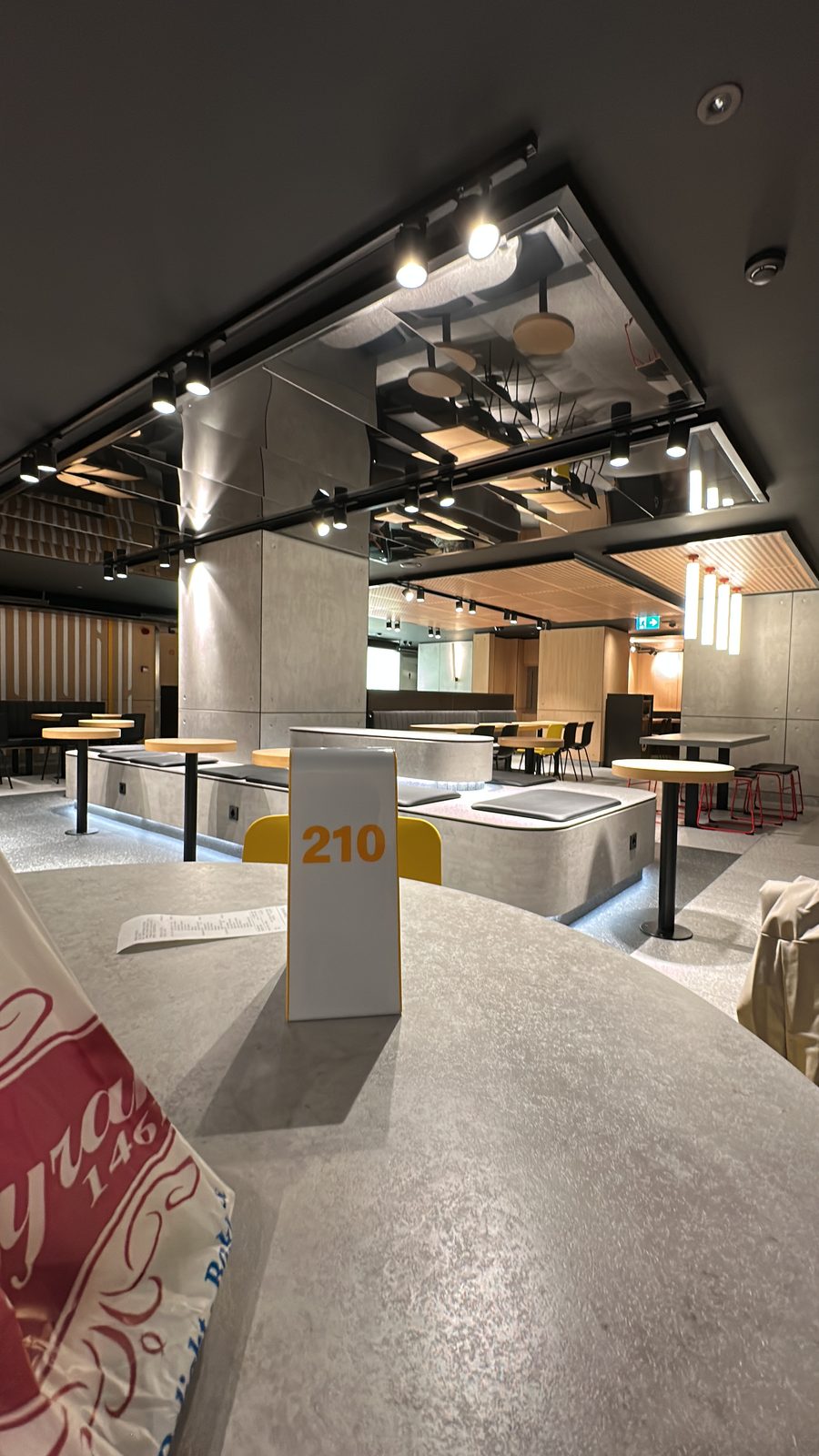
Tent 210, and the floors the crew would otherwise have to search.
So I flipped the tent over.
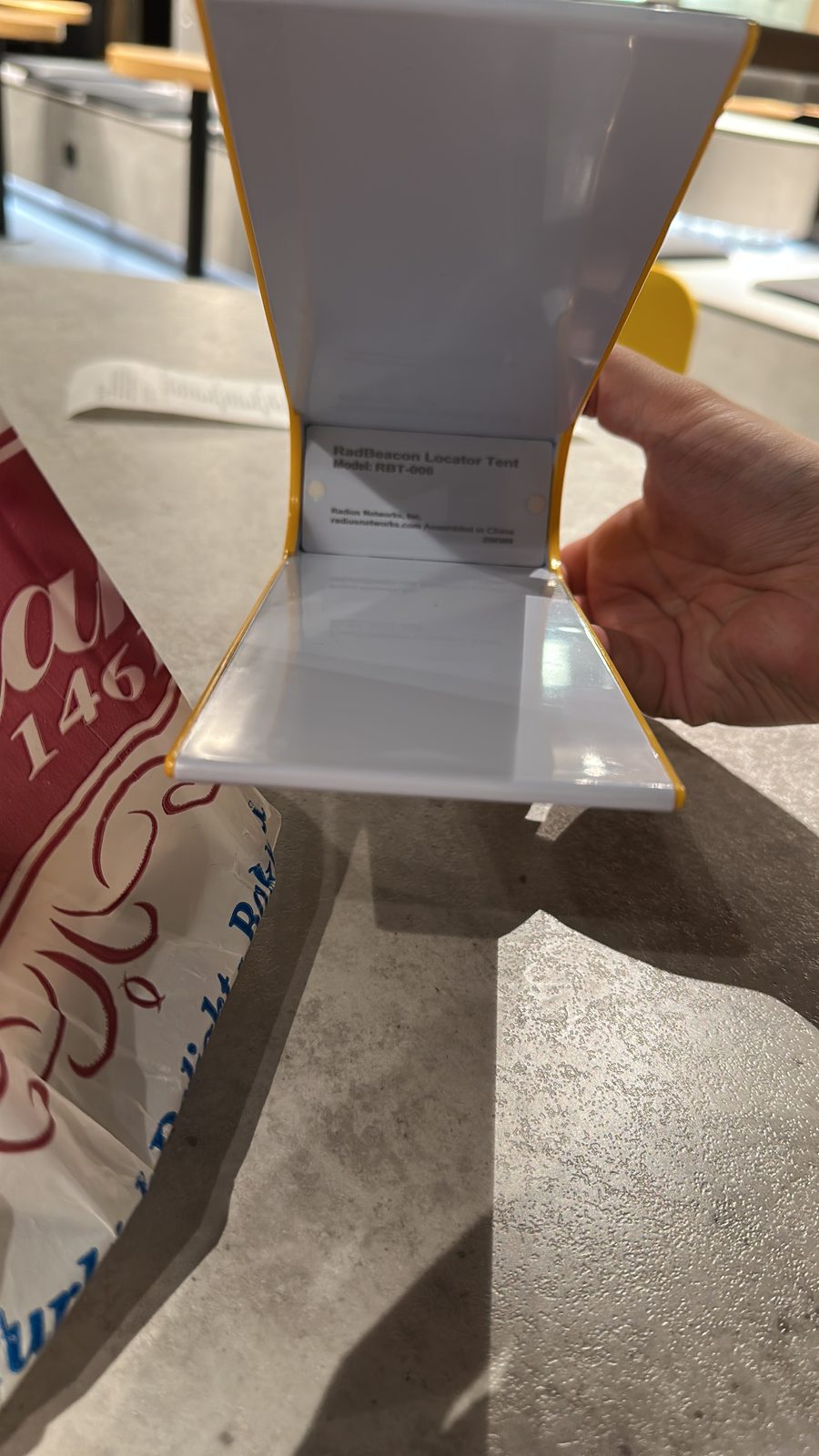
Not just a number.
The label inside says RadBeacon Locator Tent, Model RBT-006, from a company called Radius Networks. The tent is a Bluetooth beacon. Receivers in the ceiling pick up its signal, the system works out which floor and roughly which table you've settled at, and a screen in the kitchen tells the runner exactly where to walk. There's a proper embedded device in there, the same class of Nordic chip you'd find in a fitness tracker, plus an accelerometer, presumably so it knows when it's been knocked over or carried off. Someone filed FCC paperwork for a table number. Hackaday covered the filing in 2018, which is how I know any of this.
We took our beacon to the third floor and sat down. A few minutes later the food found us, no wandering, no shouting our number up a stairwell. It worked so smoothly I almost missed that anything had happened.
The third floor is also where I found the food elevator. A small stainless box set into the wall, a dumbwaiter technically, buttons for floors 0 through 5, quietly moving trays up the building so nobody has to carry them. I stood in front of it longer than an adult should stand in front of a food elevator.
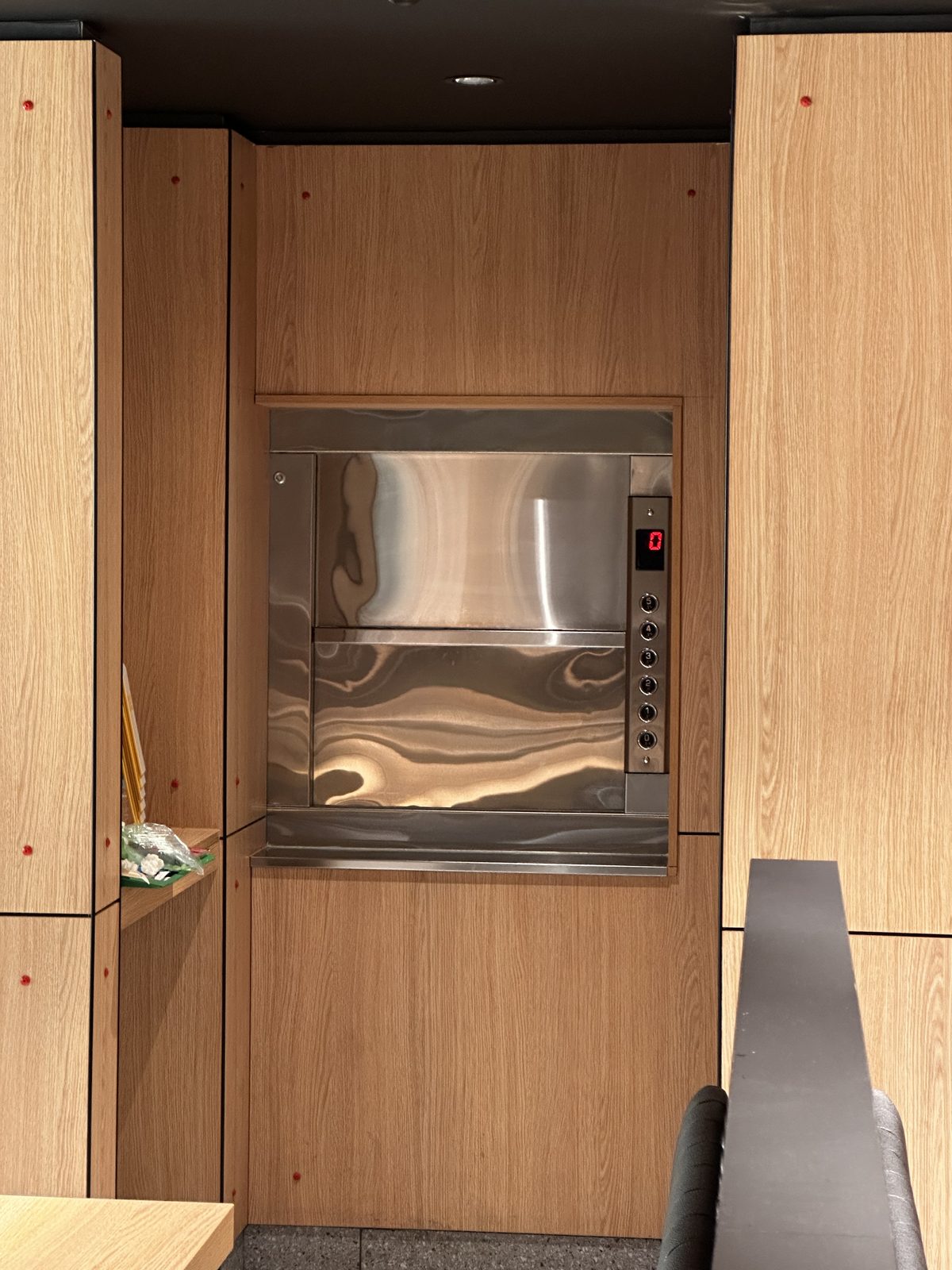
The fry elevator. Buttons for floors 0 through 5.
The rest of the floor kept the same energy. Outlets at the seats. Restrooms on every floor. A hand dryer in the restroom mounted on a rocket decal, which is not innovation, but does tell you somebody enjoyed their job.
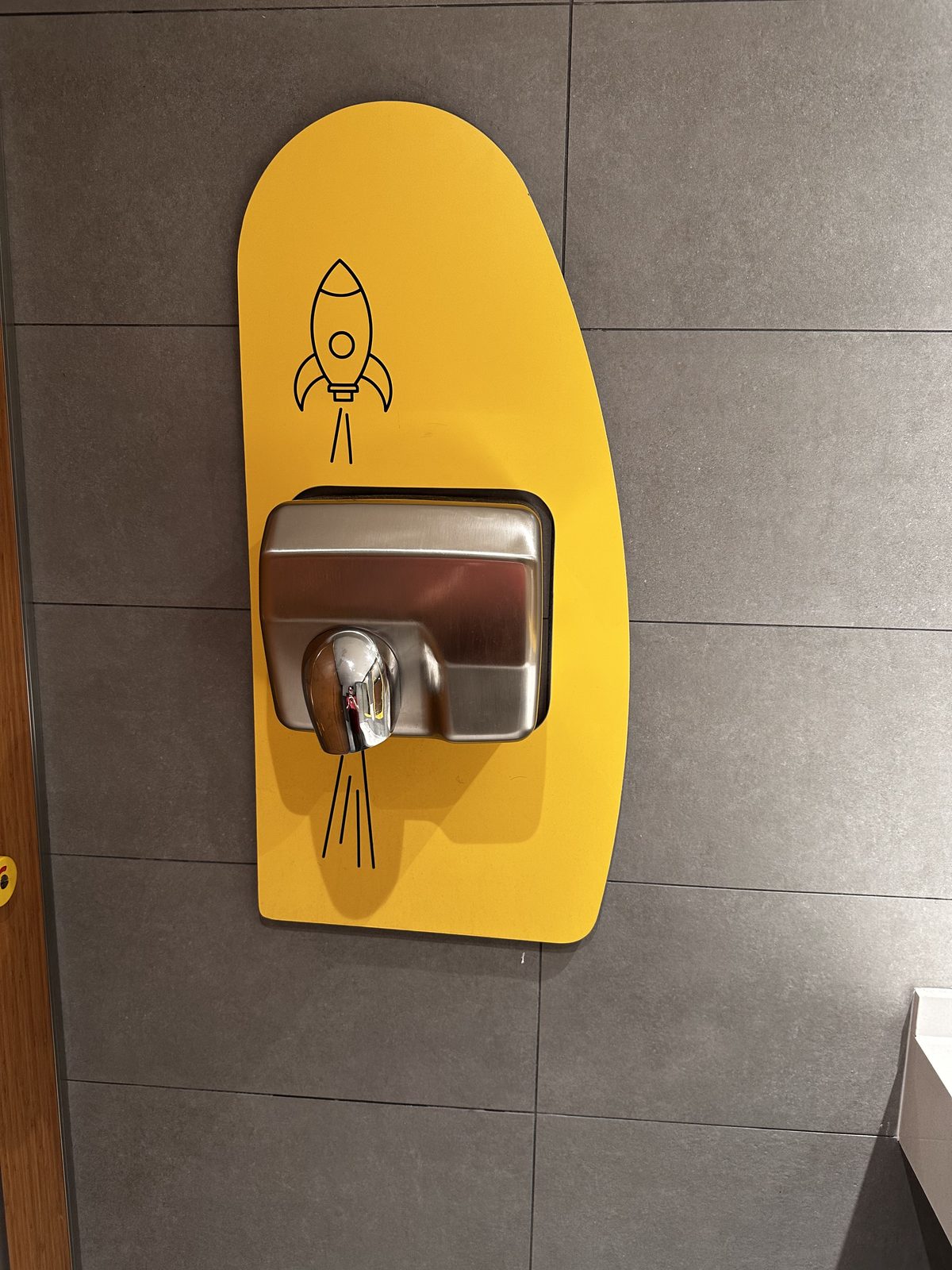
The hand dryer, doing its best.
None of the individual pieces are new. Bluetooth beacons have been around for over a decade, dumbwaiters for two centuries, and the kiosks are the same ones in every renovated branch on the planet. What got me was the fit: each piece solves one problem, which is that this restaurant is vertical, and each one gets used hundreds of times a day by people who never think about it. McDonald's calls the program Experience of the Future, which oversells it. You order, you sit anywhere you like in a six-floor building, and food arrives.
I spend a lot of time thinking about whether people actually use the technology that gets built for them. I did not expect the cleanest example I've seen all year to be a burger place I walked into on vacation. Fifteen centuries of architecture within walking distance, and I spent part of an afternoon photographing a dumbwaiter.